Mhrb
Do Mimosa Trees Have Invasive Roots?
Aug
Do Mimosa Trees Have Invasive Roots?
If you’ve been researching mimosa trees, you may have come across questions such as “do mimosa trees have invasive roots?” The short answer is that it depends on which plant is being called a “mimosa.”
The common name mimosa is used for several different plants. One of the most frequently discussed ornamental trees is Albizia julibrissin, also known as the silk tree or mimosa tree. This species is different from Mimosa tenuiflora, the botanical species historically associated with the name Mimosa hostilis.
Understanding this distinction is important when researching mimosa roots, bark and other botanical materials.
Do Mimosa Trees Have Invasive Roots?
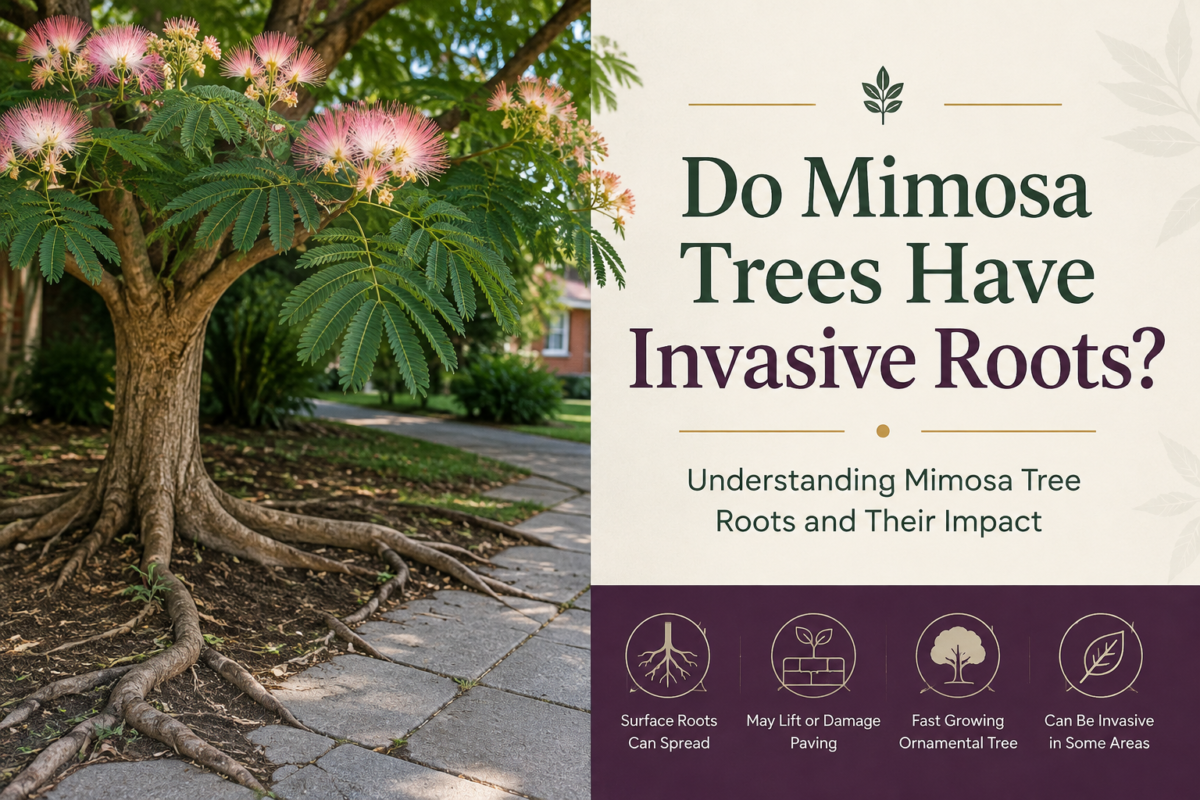
The ornamental mimosa tree, Albizia julibrissin, can develop large surface roots. University of Florida horticultural information notes that much of its root system can develop from a small number of large roots near the trunk, and these roots may raise or interfere with walks and patios as they increase in diameter.
So, while people often describe the roots as “invasive,” a more accurate description is that the tree can have a shallow, spreading root system capable of creating landscape-maintenance problems.
The plant itself is also considered invasive in several parts of the southeastern United States. Its invasive behaviour is not simply a root issue: abundant seed production, seed dispersal and the ability to resprout can all contribute to its spread.
Why Can Mimosa Roots Become a Problem?
Mimosa trees can grow quickly and establish roots relatively close to the soil surface. As the tree matures, larger roots may become visible or affect nearby hard landscaping.
Potential issues can include:
- Surface roots becoming visible
- Interference with paving or paths
- Difficulty mowing around exposed roots
- Root sprouts developing after damage or cutting
- Competition with nearby vegetation
University of Florida guidance specifically notes that surface roots can lift sidewalks or interfere with mowing.
The extent of any problem depends on the tree, soil, available space, moisture conditions and proximity to structures.
Are All Mimosa Species the Same?
No. This is one of the most important points when researching mimosa roots.
The name “mimosa” can refer to different plants. Albizia julibrissin is the ornamental mimosa or silk tree frequently discussed in gardening and invasive-plant literature.
By contrast, Mimosa tenuiflora is a different species historically known as Mimosa hostilis. It is a botanical species native to parts of Mexico and Central and South America.
Therefore, information about the root system or invasive behaviour of Albizia julibrissin should not automatically be applied to Mimosa tenuiflora.
Is Mimosa Tenuiflora an Invasive Tree?
It is important not to confuse the two species.
When people search “do mimosa trees have invasive roots,” many results are discussing Albizia julibrissin. That species has documented invasive behaviour in areas where it has been introduced. For example, the University of Florida currently assesses Albizia julibrissin as invasive in its Florida assessment, while North Carolina Extension also identifies it as invasive in North Carolina.
That information concerns Albizia julibrissin and should not automatically be interpreted as a statement about Mimosa tenuiflora.
Mimosa Hostilis and Mimosa Tenuiflora
If you’re researching Mimosa hostilis, you may also see the name Mimosa tenuiflora.
Mimosa tenuiflora is the botanical name commonly used for the species historically referred to as Mimosa hostilis. It is a member of the legume family and is distinct from the ornamental silk tree commonly called Albizia julibrissin.
This is particularly useful to understand when researching botanical materials such as Mimosa tenuiflora root bark or other plant-derived materials.
Using the scientific name can help avoid confusion caused by common names.
What About Roots Near Buildings?
If you are considering planting an ornamental mimosa tree, location is worth thinking about carefully.
Because Albizia julibrissin can develop substantial surface roots, planting it too close to paths, patios or other hard landscaping may create maintenance problems as the tree grows.
A suitable planting location should provide sufficient room for the mature tree and its root system.
It is also worth checking local guidance because the invasive status of Albizia julibrissin varies by location.
Why Does “Invasive” Mean More Than Just Roots?
When gardeners describe a plant as invasive, they are generally talking about its ability to establish and spread beyond where it was intentionally planted.
With Albizia julibrissin, seeds are an important part of that story. North Carolina Extension notes that the tree can reproduce through seed and root cuttings, while invasive-plant resources identify its ability to establish dense populations in suitable habitats.
This means that simply thinking about the roots does not give the complete picture.
A plant can have troublesome roots without being invasive, while an invasive plant may spread primarily through seeds or other forms of reproduction.
Final Thoughts
So, do mimosa trees have invasive roots?
The answer depends on the species. The ornamental mimosa or silk tree, Albizia julibrissin, can develop large surface roots that may interfere with paving and mowing, and the species is considered invasive in several regions.
However, it should not be confused with Mimosa tenuiflora, the species historically known as Mimosa hostilis.
When researching mimosa trees, roots or botanical materials, always check the scientific name rather than relying solely on the common name “mimosa.” This simple distinction can prevent a great deal of confusion.
